
Your voice, your actions, and your support—together, we build a stronger community
Who Decides What Happens Next Door?
Posted on September 27, 2026
When you buy a piece of property, you don’t just acquire the land. You acquire the legal rights that come with it.
Your neighbors may not know what the property is zoned for. They may never have looked at the future land-use map or considered what could someday be built there. But their lack of awareness doesn’t erase your rights. And it doesn’t give them veto power when you decide to use or develop your land in a way the law allows.
Put more bluntly: You don’t get to tell your neighbor they can’t develop their property simply because you assumed it would remain unchanged or you don’t like what they’re proposing to do with it.
That doesn’t mean property owners should be able to do anything they want. Development can affect traffic, water, the environment, public services and the quality of life of surrounding residents. Communities have rules for a reason, and neighbors have every right to ask questions, raise concerns and demand that those rules be followed.
Therein lies one of the most difficult questions facing any community: Where do individual rights end and community decisions begin?
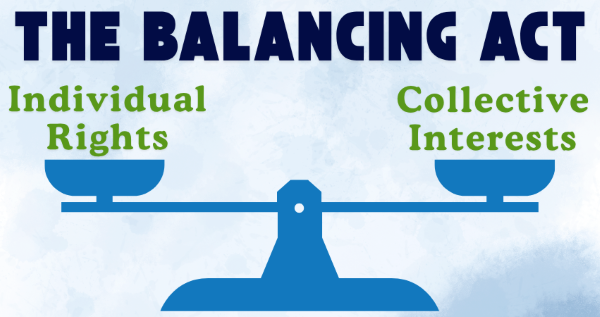
It’s easy to defend property rights when we’re talking about our own land. The issue becomes more complicated when we’re talking about the property next door, down the street or along the route we drive every day.
A family that has owned agricultural land for generations may decide to sell or develop a portion of it. Nearby residents may worry about traffic, changes to the landscape or the loss of open space. A business owner may need to expand. Conservation advocates may want to protect natural resources. Young families may hope to find housing they can afford in the community where they grew up.
So, whose priorities should prevail?
All of those interests deserve consideration. But concern about change doesn’t automatically outweigh the legal rights of the person who owns the land.
That’s why land-use decisions are rarely as simple as they appear on social media or at a public meeting. Elected officials must listen to residents while also considering property rights, environmental impacts, economic realities, infrastructure needs and legal requirements.
Public input is essential, but public opposition is not the same as legal authority. A crowded meeting, an angry Facebook page or a stack of identical emails doesn’t give neighbors veto power over someone else’s property. If it did, nearly every meaningful change could be stopped by whoever shouted the loudest.
At the same time, property rights are not unlimited. If every property owner could do whatever they wanted without regard for the surrounding community, the result would be chaos. Local government’s responsibility is to apply the rules fairly and find the appropriate balance.
Development proposals typically go through professional staff review, technical studies, public hearings and votes by elected officials. Residents have the right to ask questions, challenge assumptions and advocate for improvements. Property owners have an equally important right: to have their proposal judged according to the rules governing their land, not according to whether the loudest opponents want it to remain untouched.
Too often, land-use debates stop being about the actual proposal and become exercises in assigning motives. Supporting a project that follows the rules doesn’t mean an elected official is “in the pocket of developers.” It may simply mean that official understands that personal opposition is not a legal basis for denial. Accusations may generate attention, but they don’t produce better decisions.
Martin County has never been frozen in time. Every neighborhood, school, park, business center and conservation area we value today exists because previous generations made decisions about how land should be used and developed.
The challenge isn’t to stop change. It’s to manage change responsibly.
That means judging each proposal on its merits. Does it follow the rules? Does it fit the surrounding area? How will it affect traffic, water, the environment and public services? Can it be improved? Will it leave Martin County better or worse in the years ahead?
Those questions require more thought than simply declaring ourselves “for” or “against” development.
Protecting what makes Martin County special matters. But that cannot mean treating privately owned land as permanent open space simply because the people living nearby would prefer it that way. Respecting this community also means respecting the rights of the people who own property here.
The real question isn’t whether Martin County will change. Communities always do. The question is how we allow it to evolve while protecting the qualities that make this community worth calling home.